Key Takeaways

Preparation before fireworks begin can reduce stress and prevent safety problems for pets. A dog that hears the first loud bang without a safe space may panic, bolt through an open door, or hide where you cannot reach them.

If you do one thing, set up a quiet indoor room before the evening starts. Close windows and curtains, check collars and identification details, and keep your pet inside before the noise begins.

  • Create a calm room with familiar bedding, water, and a favourite toy

  • Keep doors, gates, and windows secure during celebrations

  • Walk dogs earlier in the day, before fireworks are likely to start

  • Avoid forcing a frightened pet out of their hiding place

  • Ask a qualified veterinary professional for advice if fear is persistent or severe

When fireworks turn a familiar evening into a frightening experience

A dog may be resting beside the sofa at 8 pm when the first sharp bang breaks the silence. Within seconds, a familiar room can feel unsafe: they may shake, pace, pant, hide behind furniture, or try to reach an exit. Fireworks often begin around dusk, when many pets are settling down after their evening walk or meal.

If you do one thing before the noise starts, bring your pet indoors early and check that doors, windows, gates, and ID details are secure. Sudden sound can trigger a flight response, meaning an animal tries to run from what it sees as danger, even if it is usually calm and well trained.

Next, watch for small changes rather than waiting for obvious panic. A cat may crouch under a bed, stop eating, or become unusually quiet; a rabbit may freeze or thump; a dog may cling to you or refuse to go outside. By the end of this guide, you will have a practical plan to prepare your home, comfort your pet, and monitor them safely while fireworks are happening.

Common mistakes to avoid:

  • Taking a dog for a late walk after the bangs have started

  • Forcing a hiding pet to come out for reassurance

  • Leaving a frightened animal outside, in a car, or near an open door

  • Assuming silence means a small pet is not stressed

Prepare your home before the first bangs begin

Next, set up your home before evening noise starts. Walk your dog earlier than usual, while streets are quieter, and check that their microchip details and collar tag are up to date. Close doors, windows, garden gates, and pet flaps before the first fireworks, as a frightened pet may try to run or squeeze through a gap.

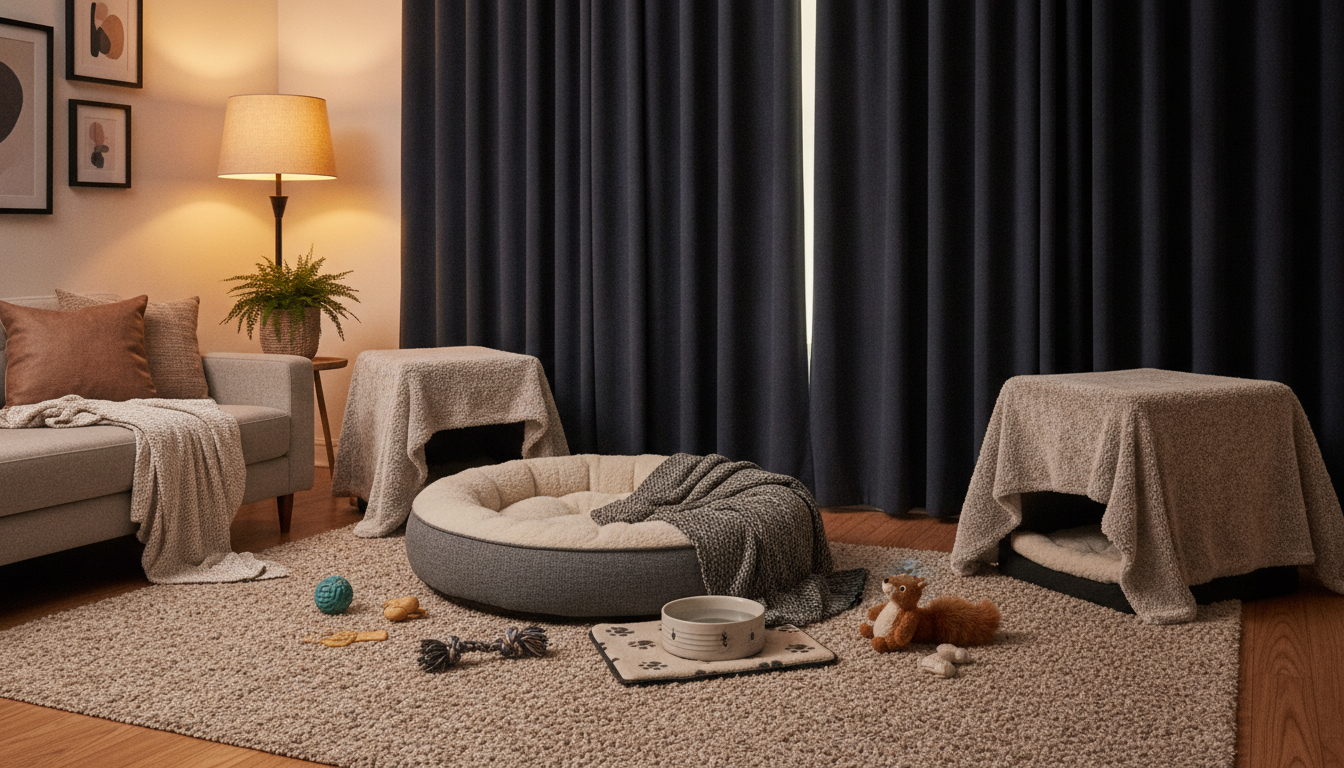
If you do one thing, prepare one calm room where your pet can choose to settle. Add familiar bedding, fresh water, a favourite toy, and a covered space such as an open crate with a blanket over part of it. Closed curtains can soften flashes from outside, while low background sound can make sudden bangs less sharp.

A quiet retreat works best when your pet already knows the space, not when they are shut inside it for the first time during a noisy evening. For example, leave the room open during the day and place treats or a meal there so a cat or dog can enter by choice.

  • Walk dogs before dusk when possible

  • Check that microchip and ID details are current

  • Secure windows, doors, gardens, and pet flaps

  • Place water, bedding, toys, and a hiding spot in the retreat

  • Keep the retreat available rather than forcing your pet into it

Help your pet feel safer during fireworks

Also, make the room feel as predictable as possible once the noise starts. Close curtains before dark, play gentle background sound such as a radio or calm music, and leave access to a familiar bed, crate, or quiet corner. Let your pet choose where to settle rather than moving them to a spot you think they should use.

Stay calm and speak in your usual voice, but do not force cuddles, play, or interaction. A dog might prefer to lie behind the sofa, while a cat may retreat under a bed for an hour or two. If you do one thing, keep doors and windows secure while giving your pet space to come to you when they are ready.

Signs your pet needs extra support

Next, watch your pet's body language without hovering over them. Trembling, pacing, hiding, panting, repeated escape attempts, or refusing food can all show that the noise is causing distress. A pet that normally eats dinner quickly but leaves it untouched during fireworks may be too worried to settle.

If these signs are strong, last for several hours, or happen every firework season, contact a vet for advice before the next event. Common mistakes include punishing frightened behaviour or trying to pull a hiding pet out into the room. Keep the area safe, reduce noise where you can, and seek professional guidance if your pet cannot recover calmly.

Make responsible choices that protect every animal

Also, safety plans should cover the animals outside as well as the one beside you on the sofa. Keep cats indoors before dark, and bring rabbits, guinea pigs, and other small pets into a sheltered, quiet area before fireworks are likely to start. Check that doors, hutches, runs, and garden gates are secure, since a frightened animal may try to hide or escape.

Avoid leaving pets alone where possible, especially during the noisiest part of the evening. If you need to go out, ask a trusted adult to stay with them, leave their safe space ready, and keep your contact details available. A calm person nearby can notice distress early and prevent risky behaviour such as chewing, scratching, or bolting.

Know when anxiety needs professional support

That said, a little fear is different from severe or repeated anxiety. Contact a veterinary professional if your pet repeatedly panics, hurts itself, cannot settle for hours, stops eating, or reacts strongly to loud sounds long after the fireworks have ended.

If you do one thing, record what you notice: the time the noise began, your pet's behaviour, how long it lasted, and what helped. This gives the veterinary professional useful detail and can help you make a clearer plan for the next firework night.

What small step will help your pet feel safer tonight?

Preparation is one of the kindest forms of care. A closed curtain, a quiet room, a familiar blanket, or an updated ID tag can make a real difference when Firework Night turns noisy.

So, choose one small change today that gives your pet more comfort and control. When the first bangs begin, you will know you have already taken a calm, responsible step to help them feel safer.

Build confidence in caring for your pet
